
Highest Distinction for the Institute of Theology and Ecology of the Orthodox Academy of Crete at the Greek Green Awards 2026
Saturday, March 7, 2026
A nationally recognized distinction of exceptional significance was conferred upon the Institute of Theology and Ecology – Department of the Orthodox Academy of Crete (OAC)
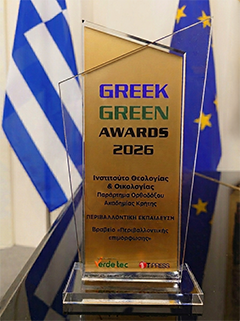
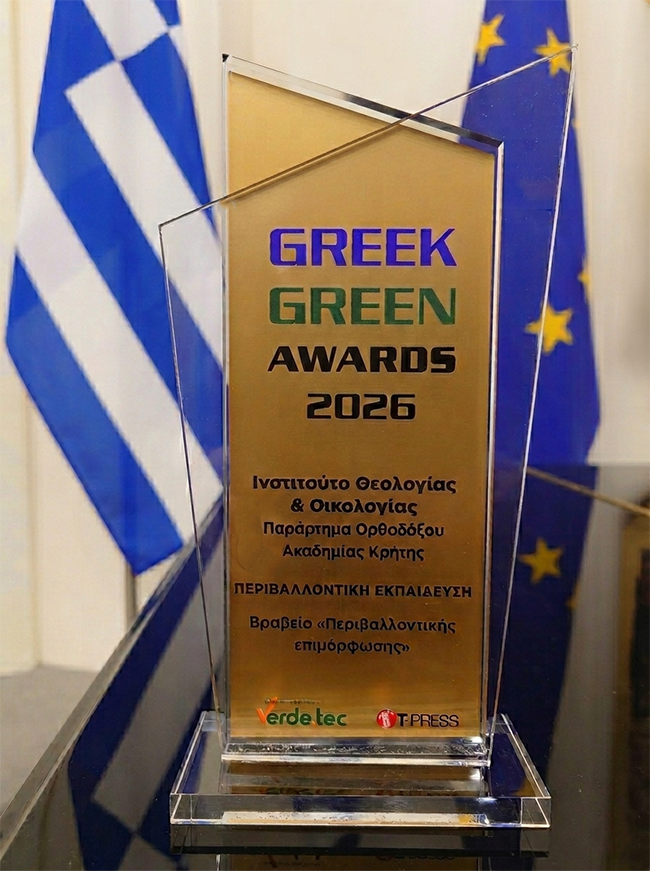
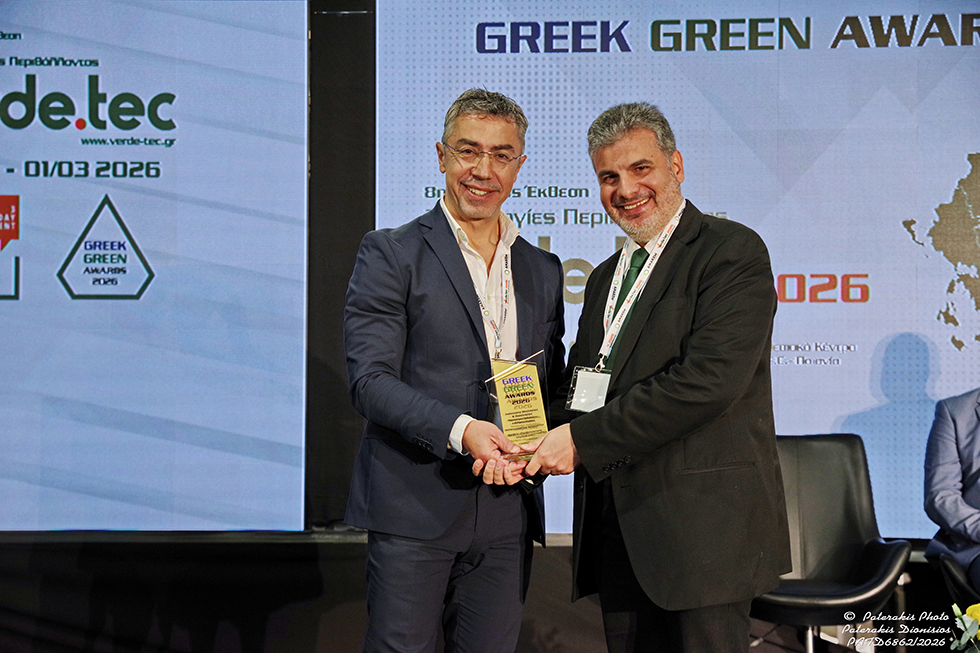
A nationally recognized distinction of exceptional significance was conferred upon the Institute of Theology and Ecology – Department of the Orthodox Academy of Crete (OAC), which was honored on Saturday, 28 February, with the highest distinction in the category “Environmental Education,” receiving the premier award for “Environmental Literacy” at the Greek Green Awards 2026, held during the 8th International Verde.Tec Exhibition.
This distinction was awarded by a multi-member Scientific Committee composed of distinguished academics, expert scientists, and representatives of institutional bodies of national and international standing. The evaluation process is based on rigorous qualitative and scientific criteria, highlighting initiatives that constitute “best practices” with demonstrable social and environmental impact. This award confirms the Institute’s national and international recognition as a model of scientific and research excellence.
The Institute of Ecology and Theology – Department of the OAC was established in 1991 by decision of the OAC Board of Directors. In 2026, it marks 35 years of uninterrupted service, representing the institutional continuation of the words and actions of the Ecumenical Patriarchate of Constantinople in the field of the theological grounding of ecological responsibility. For this reason, as emphasized on the Sunday of Orthodoxy by the OAC’s General Director, Dr Konstantinos V. Zormpas, during the Institution’s official celebration, the award “is dedicated to His All-Holiness Ecumenical Patriarch Bartholomew, the President and members of the Board of Directors, and all staff for their tireless efforts.”
The award recognizes the role of the Institute of Theology and Ecology, which is founded upon the integration of theological reflection and scientific research, with the aim of promoting environmental ethics, sustainable development, and social cohesion, particularly in the following areas:
· The organization of international Conferences in the Natural Sciences at the Orthodox Academy of Crete, which have established Crete as a hub of global scientific dialogue.
· Systematic participation in European and international research projects, including:
– The SaveH2O project (Greece, Cyprus, Bulgaria), focusing on the rational management of water resources and the mitigation of water scarcity.
– The TORAL project (Greece, Belgium, Poland, Turkey), emphasizing cross-sectoral learning.
– The AUGE project, in collaboration with the Theological School of the Church of Cyprus, aimed at strengthening ecological education.
– ERASMUS+ KA2 Strategic Partnership programmes.
– The RIS3Crete programme for the enhancement of regional innovation.
Of particular importance is the collaboration with professors from Michigan State University (USA) for the offsetting of carbon dioxide emissions generated by the OAC’s international conferences, thereby integrating contemporary climate-neutral practices within the academic sphere.
The Institute’s educational programmes and publications—especially those developed since 2015 – were also commended, focusing on:
· Climate resilience and adaptation.
· Management of water scarcity and water resources.
· The promotion of Crete’s local biodiversity, honoring the work of the late Professor Jacques Zaffran, who dedicated his life to the study of Cretan herbs and established the OAC’s Museum of Cretan Herbs.
· Circular economy and environmental culture.
· The Mediterranean diet as a model of sustainable development.
· Environmental governance and energy democracy, with particular emphasis on energy communities and the mitigation of energy poverty.
· The integration of artificial intelligence with applied environmental ethics.
The Orthodox Academy of Crete was the first institution in Crete to utilize Renewable Energy Sources in its facilities through medium-voltage net metering, demonstrating that sustainability is not merely a theoretical declaration but an implementable practice.
In an era marked by global instability, geopolitical tensions, and climate crisis, this recognition carries particular symbolic weight: it underscores that respect for humanity and for “Creation” constitutes a fundamental prerequisite for peace and a sustainable future, grounded in a vision of leadership, innovation, respect for universal values, and the integration of high-level environmental scientific knowledge with substantive social contribution.
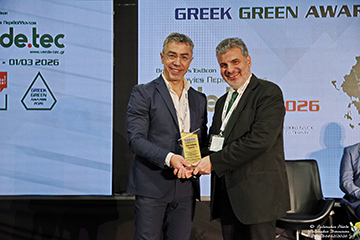
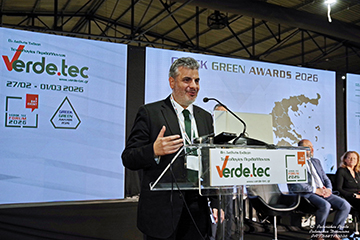
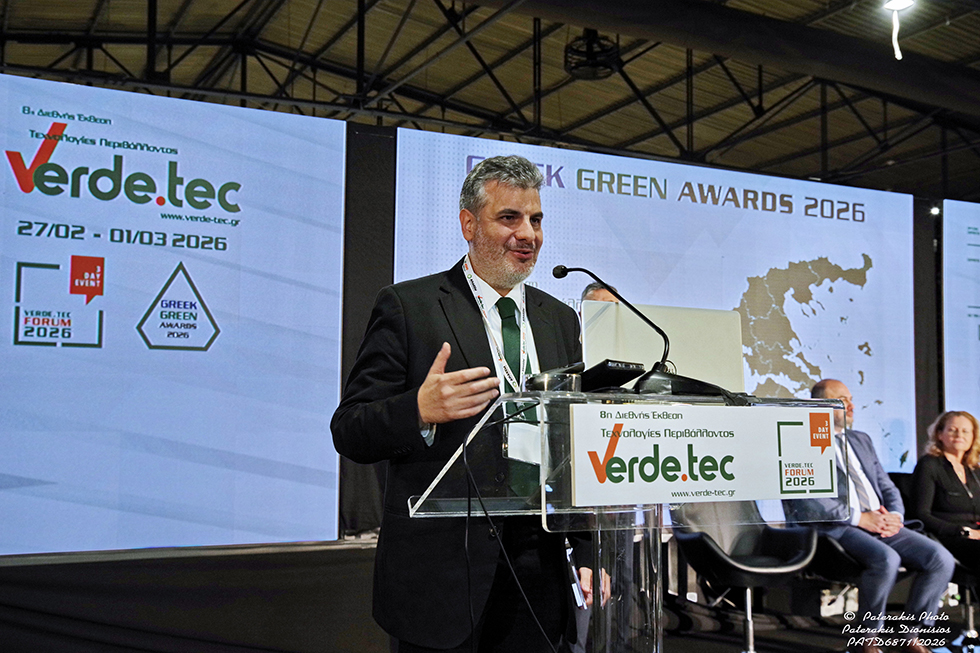
The award ceremony took place at the MEC Paiania exhibition center, in the presence of representatives of the academic community, local government authorities, and environmental policy bodies from across Greece and abroad. The award was received by Dr Antonios Kalogerakis, Head of the Institute of Theology and Ecology – Department of the OAC and Ambassador of the European Climate Pact. The award was presented by Professor Manolis Karapidákis, Chairman of the Board of Directors of the Hellenic Association of Electric Energy Storage Systems and Director of the Institute of Energy, Environment and Climate Change (IEKPA–ELMEPA). The event was hosted by Mr Michalis Stathakopoulos, Editor-in-Chief of Ecotec magazine, published by T Press.